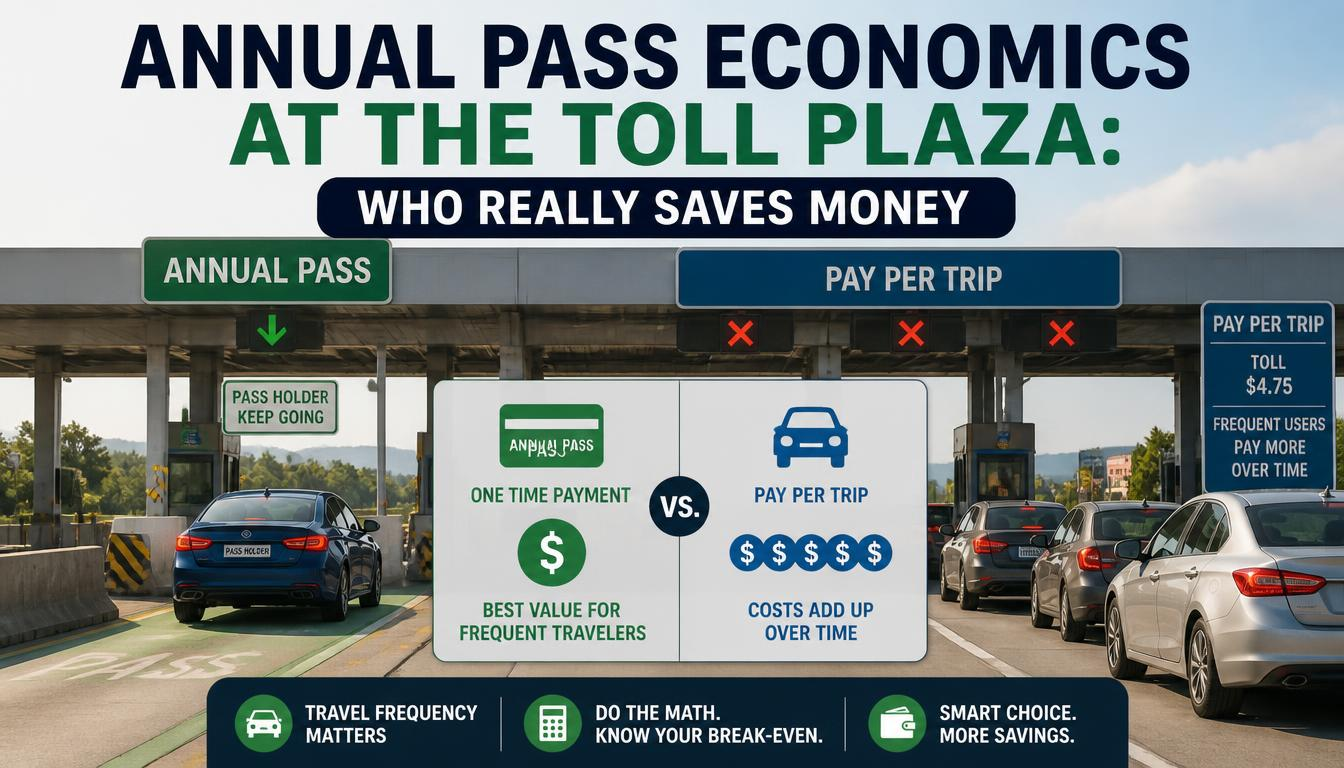
Toll plazas play a significant role in our transportation landscape, connecting regions, cities, and communities. As logistics and travel expand, the question of cost efficacy emerges, especially when considering an annual pass. This article delves into the economics of toll taxes at plazas, highlighting who benefits most from an annual pass, and how payment options like Bajaj Pay can facilitate these processes without added fees.
How do toll plazas operate and determine toll tax?
Toll plazas are designed to manage the flow of traffic while collecting fees from motorists for road usage. The toll tax structure can vary widely based on vehicle type, distance traveled, and the specific toll plaza. Many of these plazas offer an annual pass system that allows frequent users to save money compared to paying single trip tolls.
For instance, the National Highways Authority of India (NHAI) announced an increase in non-FASTag lane toll collection, making it even more important for regular commuters to consider an annual pass. If an average motorist pays ₹100 each time they travel through a toll plaza, making that trip several times a month could quickly escalate to thousands of rupees in toll taxes.
Annual passes typically offer significant savings for those who use the roads frequently. Often, these passes can equate to just a fraction of what a driver would pay over multiple trips. However, the economics depend heavily on the frequency of travel; casual drivers may not save the same amount compared to daily commuters.
What are the pitfalls of toll plaza payments without an annual pass?
A common mistake among motorists is relying on occasional toll tax payments without evaluating whether an annual pass is worthwhile. Many drivers fail to account for the cumulative costs of regular usage versus having a pass.
For example, if a user passes through a toll plaza three times a week, the total annual toll tax without a pass could reach around ₹15,600 (assuming ₹100 per trip). However, an annual pass, which might range between ₹8,000 – ₹10,000, could result in significant savings over the year. Without thorough analysis, drivers may think they are saving money by avoiding the upfront cost of an annual pass, while overlooking their habitual toll expenses.
Moreover, the introduction of payment methods like FASTag has streamlined the toll payment experience. Users who adopt this technology save time and enjoy automatic toll deductions. However, not using FASTag may lead to longer wait times and inconvenience, adding to the overall cost of toll use, both in terms of money and time.
Calculating Savings: Annual Pass vs. Pay-As-You-Go
To decide on an annual pass, drivers must calculate their probable usage and associated toll tax. For instance, if a driver plans monthly round trips over a year on a toll road, they could better assess if the annual pass is a sound decision financially. Detailed cost analysis becomes crucial here.
The key to smart financial decisions with toll fees lies in proper tracking. Do motorists often use the same routes and thus require frequent toll payments? If yes, pursuing an annual pass is usually the economical route especially since some states even offer additional discounts or benefits tied to annual purchases.
Moreover, besides direct savings on toll tax, an annual pass can also provide non-monetary benefits. For example, it may allow motorists to access express lanes, reducing congestion and possibly shortening travel time. Thus, while quantifying savings in money is critical, it’s also vital to consider the time saved.
Paying through Bajaj Pay for toll taxes
Many people are now considering digital payment platforms for toll taxes, adding a layer of convenience to the transaction. Bajaj Pay, the Bharat Connect payments platform on Bajaj Finance, enables users to pay toll taxes online without incurring any convenience fee.
Users can simply enter their vehicle registration number, select the toll plaza, and make a payment in just a few steps. The process is seamless and instantaneous, generating a digital receipt for your records immediately. Furthermore, Bajaj Pay supports various payment modes, allowing users to choose their preferred transaction method.
In addition to being fee-free, Bajaj Pay also rewards users for making payments through their platform. With points or cashback offers, motorists can further offset their travel expenses. For those who frequently engage in toll-driven travel, utilizing Bajaj Pay can serve as a beneficial choice.
Conclusion
Toll plazas can impose significant costs on regular commuters, making the choice between a single toll tax payment or an annual pass crucial. Understanding the structure of toll taxes, alongside projecting personal travel commitments, can help motorists make informed financial decisions. With services like Bajaj Pay available, paying toll taxes can be done quickly and without any fees, ensuring commuters save as much money as possible. For those traveling frequently through toll plazas, exploring options for an annual pass and using convenient payment platforms is a wise approach to minimize expenses effectively.