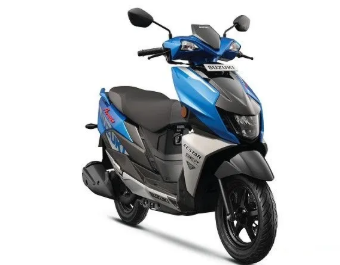
The Suzuki Avenis is designed for riders who prefer sharp styling without moving away from the convenience of an automatic petrol scooter. Its real appeal lies in how it combines a compact 125-class engine with features meant for daily travel. Your preferred seating position and storage requirements should lead the decision.
Where the Avenis fits among Suzuki scooters
Suzuki scooters portfolio includes the Avenis, Access and Burgman Street, but these names represent different design priorities. The Avenis places greater emphasis on youthful bodywork, angular panels and a sport-inspired profile. The Access leans towards familiar family-scooter practicality. The Burgman Street offers a more substantial, maxi-scooter influenced appearance. A buyer looking at the Avenis should therefore decide whether its styling and ergonomic layout suit the way the scooter will be used.
There is no single definition of sporty that guarantees superior performance. A scooter can look aggressive without being intended for race-track riding. Its advantage for the right rider is that a lively design need not mean giving up routine usefulness. Evaluate the design with luggage and a passenger in mind, not only during a solo showroom inspection.
Verified engine characteristics
The current Suzuki Avenis product information identifies a 124 cc class, air-cooled single-cylinder engine with fuel injection and a continuously variable transmission. Manufacturer specifications list maximum output of 8.7 PS at 6,750 rpm and 10 Nm at 5,500 rpm. Conditions such as road gradient, load and servicing affect what the rider experiences.
Automatic transmission makes the Avenis accessible to commuters who do not want to operate a clutch or select gears. Nevertheless, smooth throttle inputs help both comfort and economy. Listen for abnormal sounds during a test ride, particularly as the scooter begins moving from rest.
Size, parking and manoeuvrability
Suzuki lists a 1,265 mm wheelbase and a kerb mass of about 106 kg for the referenced Avenis. The published 780 mm seat height will not suit every inseam equally. Sit with both feet near the floor and check whether you can reverse the scooter from a slight incline without relying on another person.
The Avenis uses a 12-inch front and 10-inch rear wheel in its listed specification. This mix does not establish ride comfort on its own. Tyre construction, suspension settings and surface conditions also matter. Turn through a narrow lane at walking speed and notice steering effort.
Features that matter in an ordinary commute
The manufacturer identifies a body-mounted LED headlamp, a digital console, a front box with a USB socket, an external fuel cap arrangement and under-seat storage among key features. Some connected functions depend on the exact edition.
The under-seat compartment is presented as useful for everyday articles, but storage shape matters more than a capacity claim. Test whether your rainwear, small bag or helmet will fit. Likewise, connect your actual smartphone if a feature demonstration is offered. Check whether alerts are visible in daylight and whether the controls are easy to operate with riding gloves. A simple convenience feature only becomes valuable if it works reliably in your usual routine.
Brakes, tyres and safety considerations
The model specification lists a front disc and rear drum arrangement with combined braking provisions. Understand what the fitted system does and how it differs from an anti-lock braking system; the two terms should not be treated as interchangeable. At delivery, confirm the braking equipment for your actual version instead of relying on promotional photographs. Test the brakes in a controlled setting and learn to increase pressure progressively rather than grabbing either lever suddenly.
Regular tyre checks deserve equal attention. Uneven pressure can affect handling, mileage and tyre life. Suzuki publishes different suggested rear pressures for solo and two-up riding, so the owner manual should be the reference when a passenger regularly travels with you. Check tyre condition before long rides and have visible cuts or embedded objects inspected. Protective riding gear matters even on a short journey to the local market.
Mileage, maintenance and practical costs
The Avenis has a 5.2-litre fuel tank in the published specification. Use several tank-to-tank observations from your own commute to form a sensible expectation. Avoid filling the tank beyond the recommended level or using an unusually short refill interval to calculate consumption.
For maintenance, the key expenses include scheduled oil changes, filter checks, brake-pad or shoe wear, tyres and transmission components. A reliable local service centre may prove more important than a small difference in advertised fuel efficiency. Compare written servicing schedules rather than relying on a salesperson’s verbal estimate of annual costs.
What a fair buying comparison should include
Compare the Suzuki Avenis with a Suzuki Access 125 only if you want to understand the difference between sporty styling and a more traditional commuter orientation. Bring a passenger to the showroom if two-up use is common. These practical distinctions reveal more than superficial claims about a better scooter.
Use dealer quotations for the same city and month. Ex-showroom prices can change and will not represent the full registration and insurance outlay. Do not treat a promotional offer as permanent or assume a feature shown online is present on the floor unit.
The Avenis decision that will age well
Choose the Suzuki Avenis if its seating geometry, control layout and sporty presentation meet your day-to-day requirements after a proper ride. If carrying family members or groceries is the dominant use, assess the Access and Burgman Street on the same practical criteria. Get a clear variant-wise quote, inspect the service network close to home and check the owner’s manual commitments. Buying a scooter becomes easier when you evaluate how it behaves in an ordinary week rather than trying to identify a universally best model.